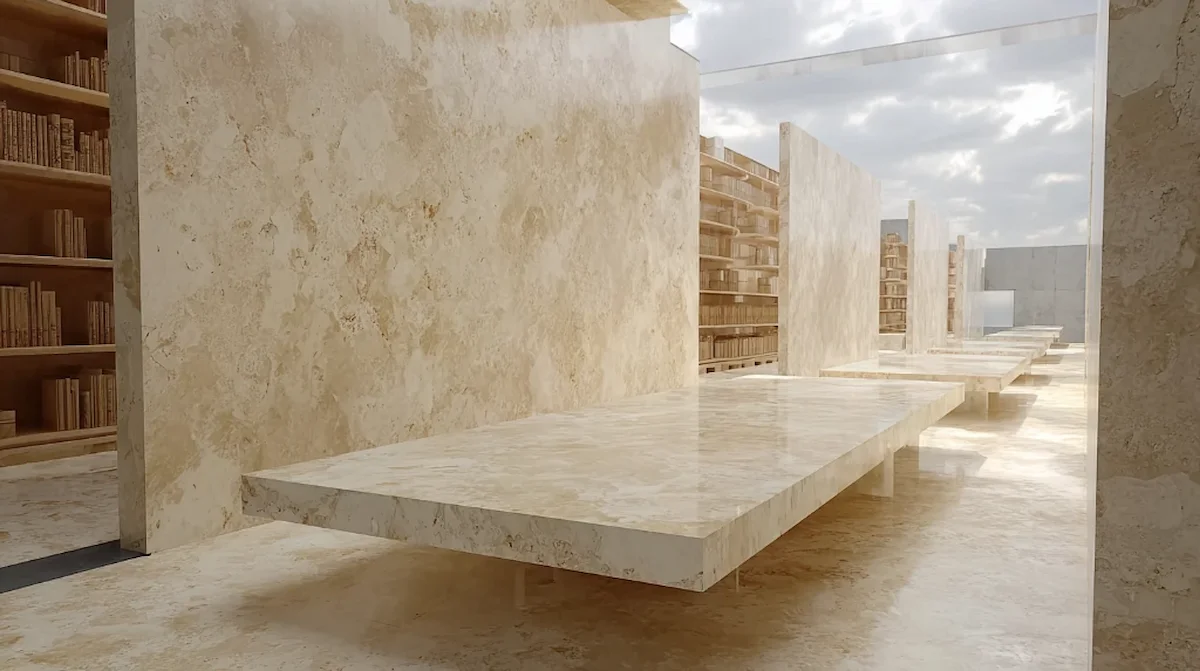
In the high-stakes world of architectural design, trends tend to oscillate violently. One decade, it’s the brutalism of raw concrete; the next, it’s the hyper-sterility of pure white porcelain. Yet, amidst this chaos of changing tastes, one material refuses to leave the room. It sits comfortably in the corner, sipping espresso, looking effortlessly expensive: Cream Natural Stone.
Why does cream stone—specifically the high-grade varieties quarried from the heart of Iran—remain the “Little Black Dress” of the construction world? Is it simply safe? Or is there a deeper geological and aesthetic science at play?
While some critics might dismiss beige tones as “safe,” the world’s leading architects know better. They understand that cream stone properties offer a unique balance of thermal performance, light manipulation, and psychological warmth that synthetic materials simply cannot replicate.
At Eternomarble, we argue that cream isn’t just a color; it’s a strategy. Let’s dive deep into the geology, the psychology, and the specific applications of Iranian cream stones that are currently dominating the global market.
Beyond the “Boring Beige”: The Psychological Appeal of Cream Stone
Warm Minimalism vs. Sterile White
For years, “Modernism” was synonymous with clinical white. While white enlarges a space, it can also feel detached, hospital-like, and cold.
Cream stones bridge the gap. They offer the expansive feeling of white but introduce calcite warmth. From a color theory perspective, cream contains yellow and red undertones. When sunlight hits a Dehbid cream marble floor, it doesn’t just reflect light; it warms the spectrum of the light, making the interior feel inviting rather than antiseptic. In the post-pandemic era, where “home as a sanctuary” is the dominant design philosophy, this warmth is a non-negotiable asset.
Light Reflectance Value (LRV) and Spatial Perception
Architects love data. When we look at architecture stone selection, Light Reflectance Value (LRV) is critical. Dark stones (LRV < 20) absorb light, shrinking spaces. Pure whites (LRV > 85) can cause glare.
Cream stones typically sit in the “Goldilocks zone” of LRV 60–75. They bounce enough light to reduce the need for artificial lighting during the day (improving LEED scores) but diffuse it enough to prevent eye strain. This makes stones like Paradise cream marble ideal for large commercial lobbies where lighting control is paramount.
The Geology Behind the Glow: Cream Stone Properties
To understand the application, you must respect the material science. Not all creams are created equal.
Mineral Composition and Durability
Most cream stones discussed here fall into two categories: Sedimentary Calcite (Limestone/Marble) or Travertine.
-
- Cream Marbles: Predominantly Calcium Carbonate. The cream color usually comes from trace amounts of iron oxides or clay minerals present during the metamorphosis.
- Travertines: Formed by hot springs. The cream color implies a lack of heavy organic impurities (which would make it gray) and controlled iron oxidation.
Porosity and Density: Why It Matters
This is where the amateur mistakes happen.
-
- High Density (Low Porosity): Stones like Harsin cream marble are incredibly dense. They have been subjected to immense tectonic pressure, closing up the pores. This makes them excellent for flooring as they resist water absorption and dirt penetration. In general, stones formed in cold regions tend to have higher density and greater durability.
- Higher Porosity: Travertines like Atashkoh have natural voids. While this sounds like a weakness, it’s actually a superpower for exteriors. Those voids allow the stone to “breathe” and provide excellent thermal insulation.
The Finish Factor: Polished, Honed, and Leathered
The perception of the color changes with the finish.
-
- Polished: Increases saturation and contrast. It highlights the veins in Simakan cream marble.
- Honed: Mutes the color, making the cream look more matte and uniform. This is the current trend for beige stone design in Europe.
- Leathered: Adds texture. It hides fingerprints and scratches, making it practical for high-traffic areas.
The Titans of Iranian Cream Stone: A Technical Breakdown
Iran is, without exaggeration, the global capital of cream stone. The geological belt running through the country produces varieties that rival and often exceed the quality of Spanish Crema Marfil or Turkish light travertines.
Here is an honest, expert breakdown of the specific stones you need to know.
The Marbles (Interiors & Flooring)
These stones are generally metamorphic or high-density sedimentary rocks. They are best suited for indoors.
Dehbid Cream Marble: The Iranian Masterpiece
If natural stone had a royal family, Dehbid would be the monarch. Quarried in the Fars province, Dehbid is world-renowned for its ultra-low porosity and glass-like polishability.

-
- The Look: It ranges from light cream to a darker, warmer beige. It is incredibly clear, often with very few veins, giving it a uniform, luxurious appearance.
- Best Use: Luxury hotel lobbies, high-end residential flooring.
- The “Gotcha”: It is a brittle material during cutting. It requires high-quality epoxy mesh reinforcement on the back, which reputable suppliers (like those we vet at Eternomarble) always provide.
Khoy, Harsin, and Paradise: The High-Traffic Contenders
Khoy Cream Marble: Hailing from West Azerbaijan, Khoy is distinctive because it has a “golden” texture. It is very resistant to pressure.
Harsin Cream Marble: Known as a “crystal marble” (though technically a recrystallized limestone), Harsin is famous for its high gloss. It often has “deer antler” vein patterns that are subtle but beautiful. It is arguably the most durable beige marble for flooring in high-traffic malls.
Paradise Cream: As the name suggests, it offers a clean, consistent background. It is chemically stable and takes a good polish.
Abadeh and Simakan: Budget-Friendly Elegance
Not every project has an unlimited budget.
Abadeh Marble: This is a classic. It has a very light, almost white-cream background with pinkish or yellowish waves. It is softer than Dehbid, making it easier to cut but slightly less resistant to heavy abrasion.
Simakan: A warmer, darker cream with beautiful spider-web veining. It’s an excellent choice for large residential complexes where cost-per-meter matters, but aesthetics cannot be compromised.
The Travertines (Facades & Exteriors)
Switching gears to exteriors, we look at Travertine. Why? Because marble can fade or crack under freeze-thaw cycles in exterior cladding, whereas Travertine thrives.
Atashkoh and Darreh Bokhari: The Lightest and Brightest
These are the premium tier of travertines.
-
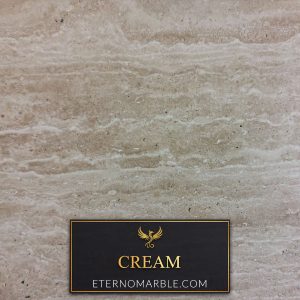
- Atashkoh Cream Travertine: This is the white/cream giant. It is arguably the whitest, cleanest travertine in Iran. The waves are very regular, making it perfect for modern, linear facade designs.
- Darreh Bokhari: slightly warmer than Atashkoh, known for its chocolate-colored waves mixed with cream. It has high density and excellent polishability.
Targh Cream Travertine
Targh is the workhorse. It offers a very reliable cream color and is generally more abundant than Atashkoh, making it a sustainable choice for massive projects like skyscrapers or large commercial centers.
Strategic Applications in Architecture
Understanding cream marble applications requires distinguishing between the pretty and the practical.
Interior Applications: Flooring and Cladding
For interiors, the goal is usually homogeneity. Architects use large slab formats of Dehbid or Paradise to create a seamless floor that looks like a single sheet of liquid stone.
-
- Design Tip: Pair cream marble flooring with dark wood joinery or matte black metal accents. The contrast prevents the room from looking “washed out.”
- Maintenance: Cream hides dust exceptionally well (unlike black marble) and hides soap scum (unlike dark granite). However, it is acid-sensitive. Spilled lemon juice on a polished Harsin floor will etch if not wiped up. Honed finishes hide these etches better.
Exterior Facades: Managing Weathering and Thermal Mass
For exteriors, Atashkoh and Targh Travertines are the superior choice.
-
- Thermal Regulation: Light cream stones reflect solar radiation. In hot climates (like the Middle East or Southern USA), a cream travertine facade significantly reduces the cooling load of the building compared to dark cladding.
- Installation: In modern architecture, these are often installed using mechanical fixation (dry installation) rather than wet mortar. This prevents salt efflorescence (white stains) and allows for insulation behind the stone.
Technical Considerations for Architects and Importers
If you are sourcing stone from Iran through suppliers like Eternomarble, here is what you need to specify.
Color Consistency and Quarry Variation
Natural stone is not ceramic; it is not printed in a factory.
-
- The Challenge: A quarry face changes as you dig deeper. The cream Dehbid block extracted in January might differ slightly from the one in June.
- The Solution: Always order 10-15% attic stock (extras) from the same batch. When designing for large spaces, request “Dry Lay” photos from the supplier, where the tiles are laid out at the factory to blend the color gradient before shipping.
Life Cycle Cost Analysis
While the upfront cost of Abadeh or Simakan might be higher than porcelain, the lifecycle cost is often lower.
-
- Restoration: If a ceramic tile chips, it’s trash. If a cream marble floor scratches, it can be re-polished in situ to look brand new, 20 years later.
- Resale Value: Real estate data consistently shows that natural stone finishes increase the resale value of properties more than synthetic alternatives.
Conclusion: The Timeless Canvas
Why are cream-colored stones so popular? Because they are the ultimate architectural canvas. They are humble enough to let the furniture and art speak, yet sophisticated enough to stand alone as a feature.
From the prestigious, glassy depths of Dehbid to the sun-bleached durability of Atashkoh Travertine, Iranian cream stones offer a spectrum of solutions that solve modern design problems. They provide warmth in minimalism, light in darkness, and organic texture in an increasingly synthetic world.
Whether you are designing a private villa or importing for a distribution center, the cream stones of Iran represent a convergence of history, geology, and modern utility. They aren’t going out of style—they are the style.
Ready to Source the Finest Iranian Cream Stones?
Navigating the quarries of Iran to find the perfect block of Dehbid or Atashkoh can be complex. At Eternomarble, we bridge the gap between Iranian geology and your architectural vision. We provide direct access to premium quarries, ensuring strict quality control, accurate sorting, and reliable logistics.
Explore our E-catalogue or contact our Stone Experts Today for a consultation on your next project.
